On May 27th, 2021, the Guatemalan government arrested eleven former members of its military for crimes committed during the Internal Armed Conflict. These crimes are logged in the “Military Diary” a fifty-four page document leaked to the US National Security Archive and made public on May 20th, 1999. The document details the murder and forced disappearance of 183 people between the years of 1983 and 1985 under the regime of Oscar Mejía Vítores. Its pages are as neat as they are ruthless, revealing the organized government system behind the scores of victims who were killed and detained during the war. To keep track of its assassinations, the state’s record-keepers devised a simple code: the number “300” next to a person’s name signified their execution.
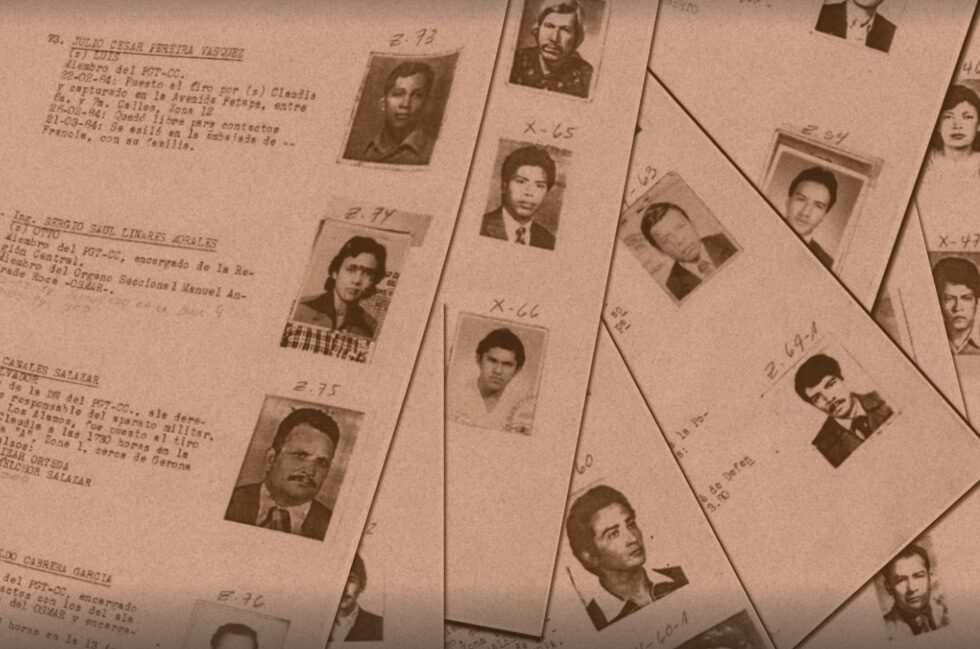
Records of forcibly disappeared individuals documented in the Diario Militar, a secret Guatemalan military logbook that reveals state coordination in enforced disappearances during the country's internal armed conflict. Photo by Myrna Mack Foundation.
A State-Sanctioned System of Terror
The operations that took place in Guatemala City from 1983–1985 unfolded during the most violent period of the country’s 36-year long civil war, marked by brutal military dictatorships responsible for Guatemala’s Indigenous genocide. Operations in the capital were typically carried out by El Archivo, a clandestine intelligence unit associated with the National Police whose members were personally appointed by Mejía Víctores. While military units in the countryside were responsible for slaughtering farmers, the Archivo sought to root out the burgeoning urban guerilla movement. Guerillas and their allies—the “internal enemy”—ended up being a remarkably broad category, an amorphous group that easily accommodated the targeting of teachers, artists, labor organizers, and other non-combatant civilians who challenged military rule: the majority of whom ended up as 300s in the Archivo’s records.
Families Who Never Stopped Looking
Now, these crimes are being tried in the judicial system of the same state that once carried them out. Still, despite years of setbacks, victims’ family members continue to push the cases forward. Lila (a pseudonym) has been seeking justice for her brother since he was disappeared in the 80s. Her family looked for him everywhere, she said in an interview with NISGUA: “In the cemeteries, in the hospitals, in the morgues, in the police stations.” They never found him. Lila recalls her mother saying “it was as if he were an animal that they had taken. They never gave reason for it.”
Lila’s mother was a member of the Association of Relatives of the Detained and Disappeared of Guatemala (FAMDEGUA). Initially, these family members organized to form the Mutual Support Group (GAM) in 1984, while violence under Mejía Víctores was at its height. FAMDEGUA formed a few years later, splitting from off from GAM in 1992. After years grassroots organizing, family members—especially mothers—had become a powerful coalition that demanded accountability for their loved ones’ disappearances, which they increasingly came to understand as a pattern of state violence. In the case of the Military Diary, family members organized through FAMDEGUA and other human rights organizations to bring the case to the Inter-American System. In 2012, the Inter-American Court of Human Rights ruled that the Guatemalan state was responsible for the forced dissapearences of the victims in the Military Diary.
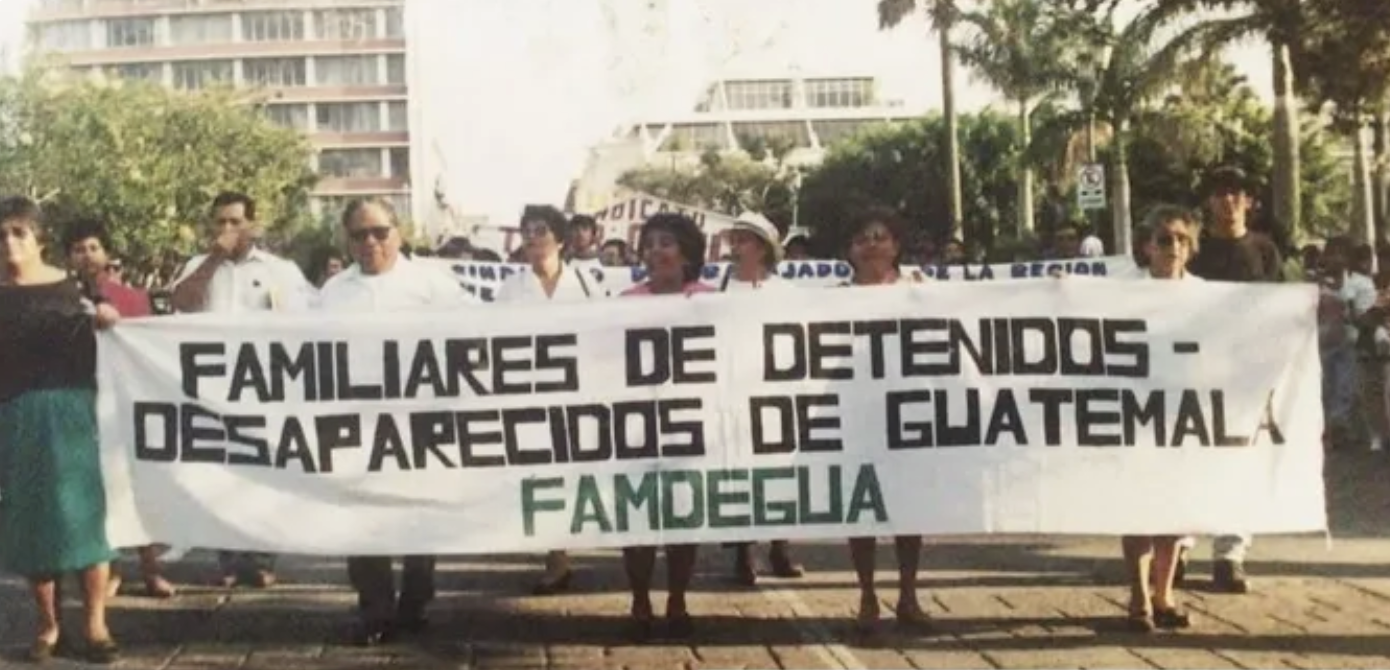
Members of FAMDEGUA (Families of the Detained and Disappeared of Guatemala) march through the capital carrying a banner demanding to know the whereabouts of their loved ones, who were forcibly disappeared during Guatemala's Internal Armed Conflict. Foto by FAMDEGUA.
The Same Elites, Decades Later
While Mejía Víctores—and other dictators and generals like him—may no longer hold office, Guatemala’s elite class has remained largely unchanged since the civil war. This group, often called the pacto de corruptos, continues to deny the genocide, and uses their considerable power to interfere with court cases related to the Internal Armed Conflict. Many court cases, including the Military Diary case, have been stalled in court for years. Despite being authenticated by experts both in Guatemala and the United States, the legal defense of the accused has repeatedly denied the Military Diary’s authenticity. From the families perspective, the tactics used by the defense are absurd. “It frustrates us, because they all know—the prosecutors, the case they’re trying—everything that happened, what happened to our loved ones. That’s why they’re there in the Military Diary, logged and everything,” Lila said.
A Judge Forced Into Exile
When Miguel Angel Gálvez, the former presiding judge over the Military Diary case, issued arrest warrants in 2021 for eleven men implicated in the Military Diary, it marked a significant step forward for the case. The following year, Gálvez ordered nine of the captured to trial. Family members had complicated feelings about the advancement after being left for so long without answers. Lila recounted her reaction to the captures, remembering that “in this moment we felt joy, and sadness, to see these people who were those in charge of kidnapping our loved ones.” Fátima, (a pseudonym), another member of FAMDEGUA whose relative appears in the Diario Militar, expressed how those captures only began a new and frustrating stage in their demand for accountability. As she explained in an interview with NISGUA, “some defendants are still in waiting for this process of sentencing, and the cases… remain stagnant. They haven’t been following up with us. It affects us in this way because of the injustice that is now in Guatemala.”
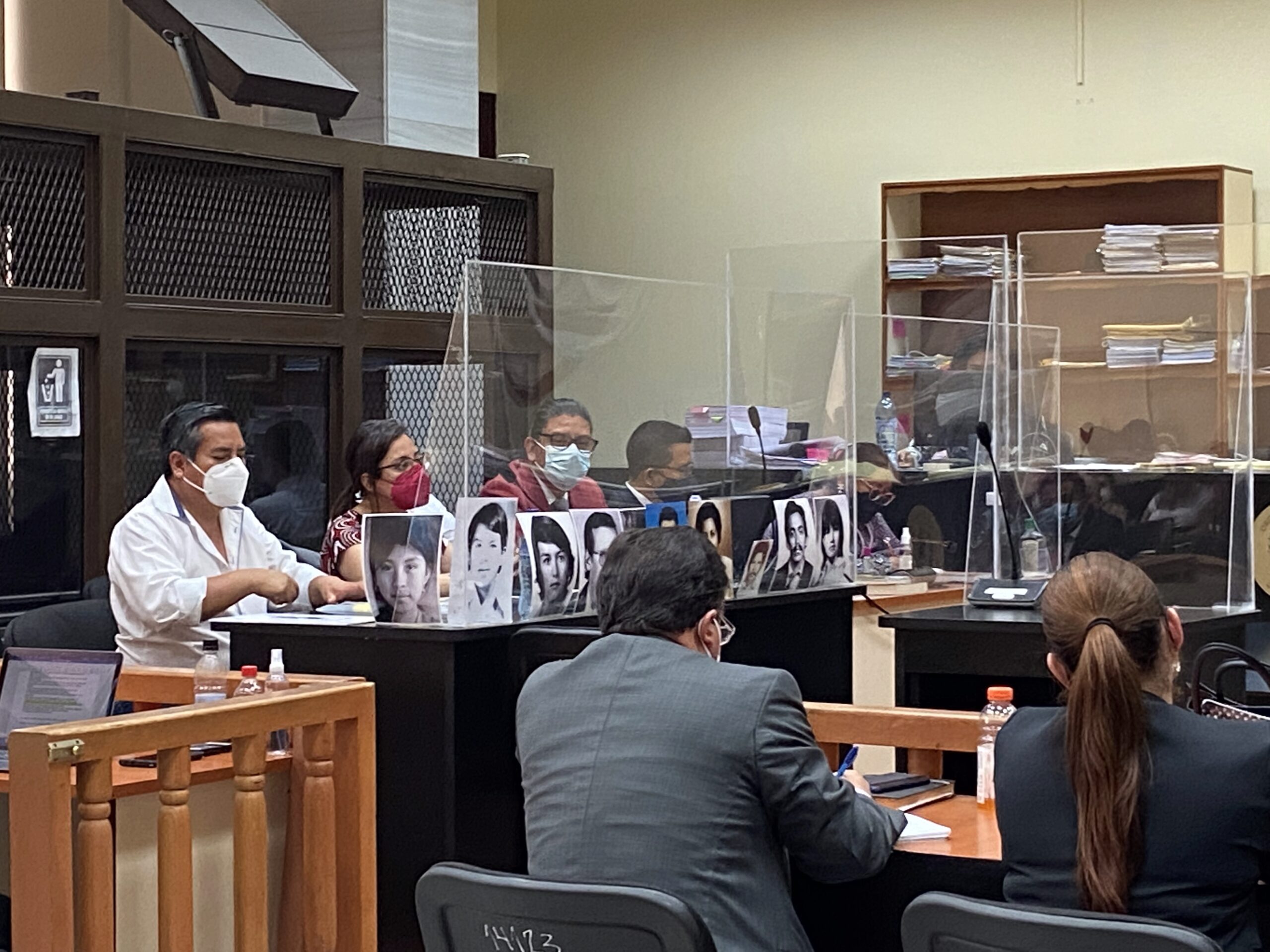
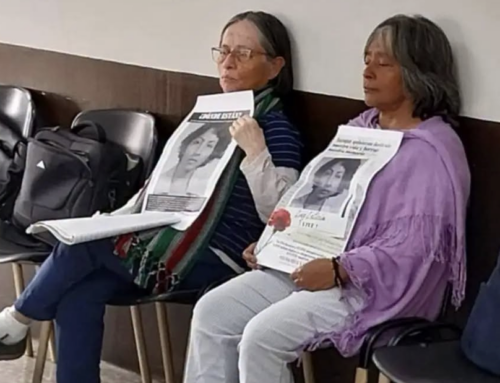
During the Military Diary trial, families demand justice for their disappeared loved ones. Photo by NISGUA, 2022.
Immediately after the arrests, right-wing lobbyists and powerful veterans’ associations targeted Gálvez. Marco Antonio González Taracena, one of the men put on trial, was the vice president of Association of Military Veterans of Guatemala (AVEMILGUA), an ex-military group that seeks to give amnesty to all those who served during the war. Both Taracena and retired colonel Jacobo Esdras Salán Sánchez—also ordered to court by Gálvez—have links to La Cofradía (The Brotherhood), a network of organized crime. Toribio Acevedo Ramírez, another one of the captured, formerly worked as the head of security for Cementos Progreso, a company owned by one of Guatemala’s most elite ladino families, the Novellas.
Right before evidentiary hearings were set to begin for five of the accused, Gálvez was threatened in a public smear campaign led by the right-wing group Foundation Against Terrorism (Fundación contra el Terrorismo, in Spanish). In November 2022, images appeared online of bingo cards with the faces of judges, lawyers, and journalists who were imprisoned or forced into exile by the Guatemalan government. All of their faces, including Gálvez’s, were covered with red Xs. Gálvez already had a reputation for being an independent judge; he had previously sent former presidents Otto Pérez Molina and Efraín Ríos Montt to prison. For many right-wing groups, his actions in the Military Diary case were the last straw. That same November, just six months after he brought the accused to trial, Gálvez resigned, fleeing Guatemala and going into exile in Europe. After he left, Lila said, “there was no support. There was no longer that fight that the public attorney was bringing to prosecute. The other attorney that they put in was different. They were much more for destabilizing the case.” The case remains effectively on hold. Hearings are continually rescheduled, only to be cancelled.
El Archivo disbanded in late 1985 as Mejía Vítores was transitioning out of power. According to an internal US State department report from 1986, the Guatemalan army then conveniently dismissed personnel who had worked with sensitive government records, covering up crimes committed during the preceding regimes. The true nature of the Archivo‘s operations remained hidden until pages of the Military Diary became public fourteen years later.
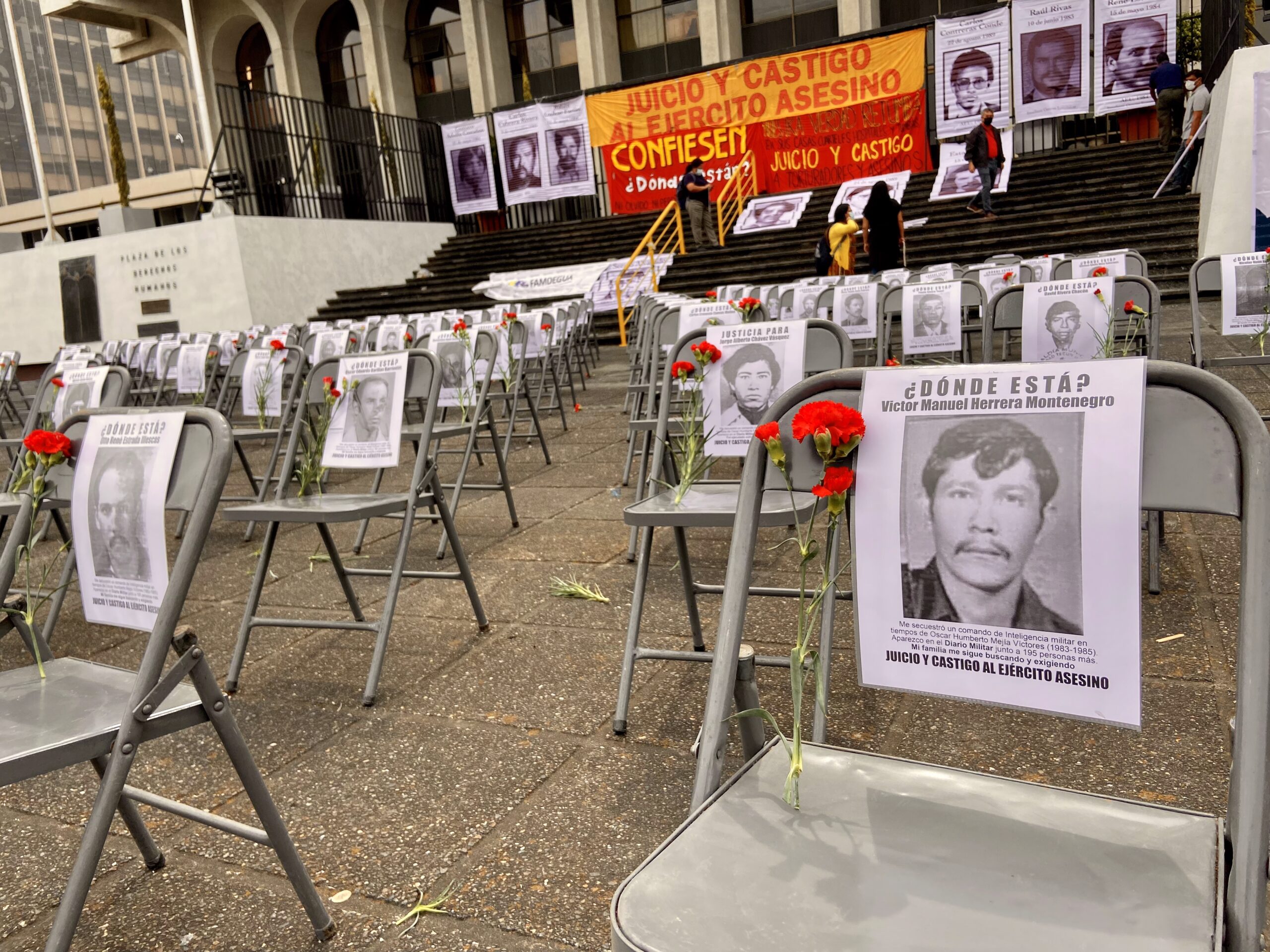
An installation at the Plaza de los Derechos Humanos in front of the Palace of Justice in Guatemala City demands justice and accountability for crimes committed during the Internal Armed Conflict. Photo by NISGUA, 2022.
What Washington Knew
Its publication also sparked questions about the extent to which the US government knew about, and actively supported, Guatemalan state violence during the Internal Armed Conflict. Internal CIA and State Department documents reveal that Washington was aware of the surge in kidnappings and disappearances under successive Guatemalan governments — and that US officials privately acknowledged state responsibility for the murders of several USAID workers — yet publicly downplayed the Guatemalan government’s role, blaming right-wing groups instead. A 1986 State Department document concluded that the practice of political kidnappings, which dated back to the 1960s, had become “institutionalized over time,” and that the US government “has failed in the past to adequately grasp the magnitude of the problem.”
If US officials struggled to grasp the scale of human rights violations in Guatemala, it was partly because the Guatemalan military had been trained in US tactics. Generals like Manuel Benedicto Lucas García and José Domingo García Samayoa passed through the School of the Americas in Fort Benning, Georgia, where Latin American officers were schooled in counterinsurgency and steeped in a virulent anti-communist ideology. To take Guatemalan state violence seriously would have meant confronting US complicity in it — something Washington seemed determined to avoid.
That avoidance had its limits. The same 1986 State Department report that acknowledged Washington’s failure to grasp the problem also described, in clinical detail, the mechanics of forced disappearance: armed groups in civilian clothes snatching targets off the street or from their homes, arriving in vehicles with polarized windows, waiting through the night if the victim was not there.
Memory as Resistance
As the US continues to militarize, trans-territorial solidarity becomes ever-more important. Especially with cases like the Military Diary, and with people like Fátima and Lila: those who have experienced state violence, demand justice, and refuse to forget. El Archivo serves as a dark example of the brutality made possible by impunity, which the Guatemalan government continues to grant military officers who served during the civil war.
“We hope that there is justice, and that all those acts they committed in the internal armed conflict do not remain in impunity,” said Fátima. Referring to the disappeared, she added that “we want them not to stay in oblivion. The memory will always stay within each one of us as families, as children, siblings. We want a future that speaks the truth about injustice.”
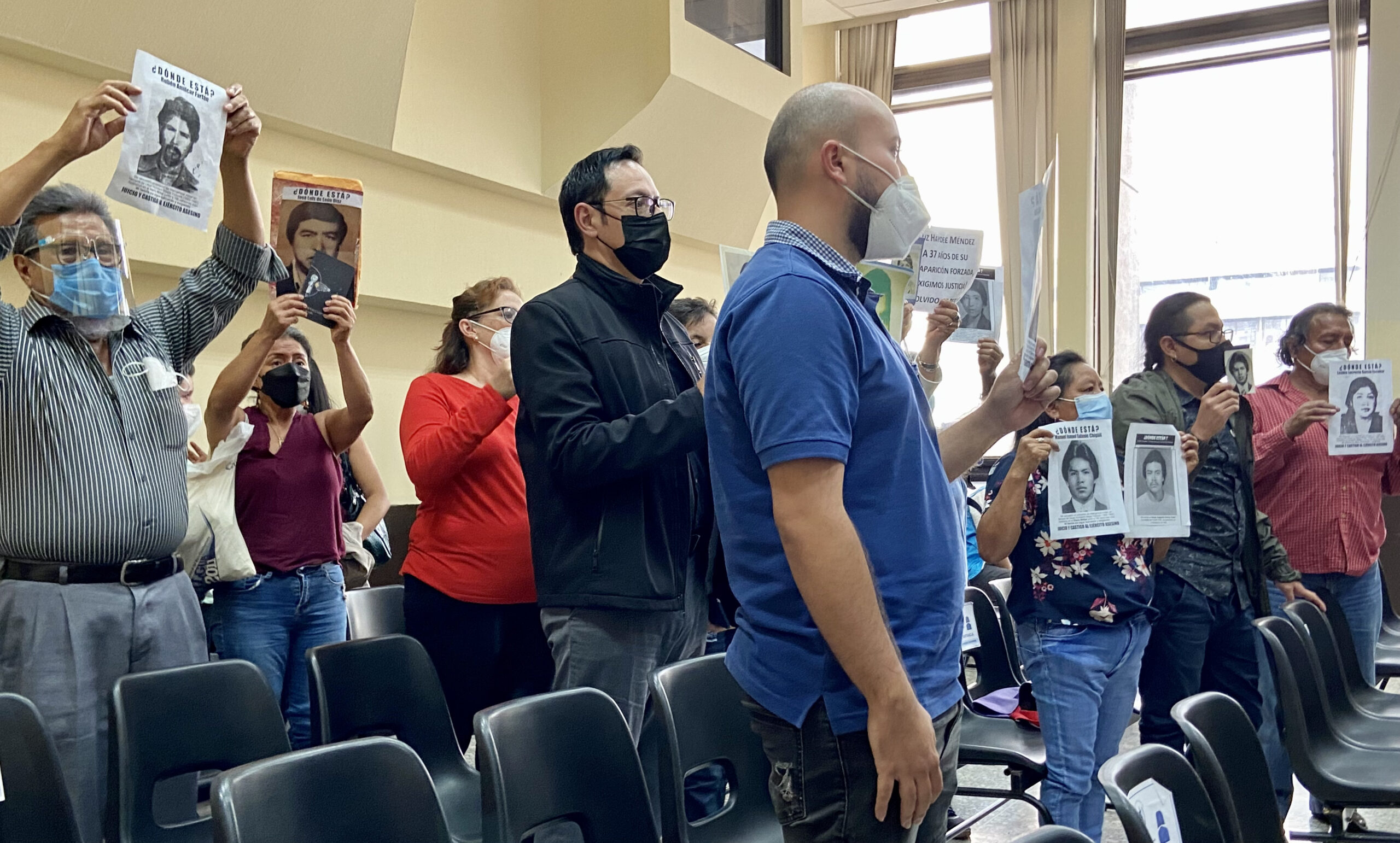
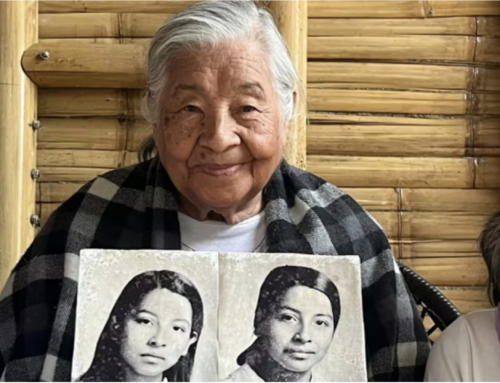
During the hearings, families and survivors brought photographs of their disappeared loved ones into the courtroom, demanding justice. Photo by NISGUA, 2022.